Designing an AI-assisted secondhand marketplace for more confident selling and buying
North America2024
/ 01
Overview
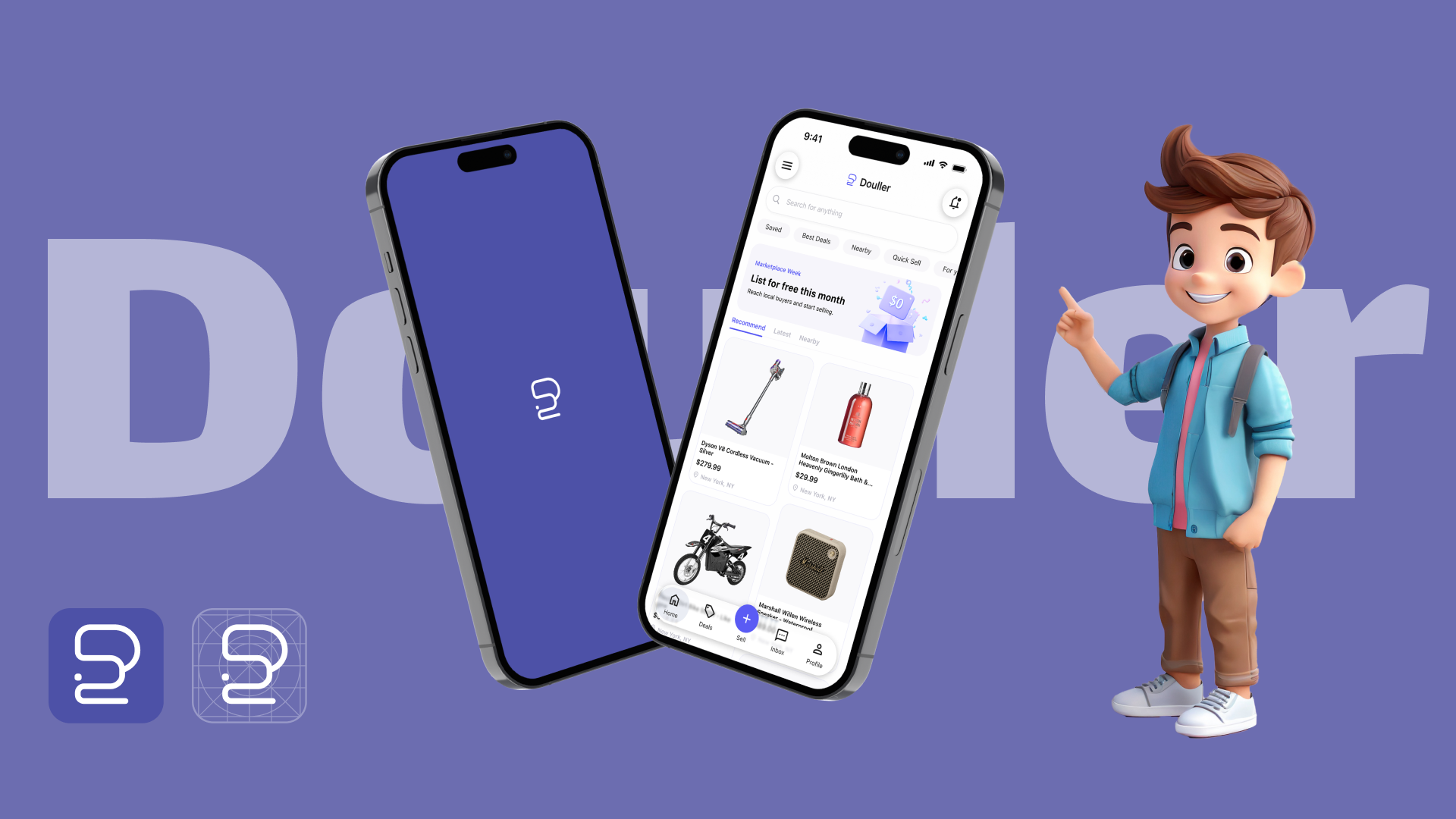
Dollar Flip is an AI-assisted secondhand marketplace designed to make selling and buying feel less uncertain. The product helps sellers bring items to market with greater clarity while giving buyers the guidance they need to evaluate products before committing to a purchase.
The marketplace experience was already taking shape when I joined the seed-stage team. My mandate was to refine the critical selling and buying journeys, establish a differentiated product direction, and translate that direction into experiences we could prototype and validate before a broader launch.
Role
Founding Product Designer
Set product direction while staying hands-on across research, interaction design, prototyping, and validation.
Scope
0→1 Marketplace Experience
Led seller and buyer journeys, AI decision support, rapid testing, and the design system foundation.
Team
Cross-functional Core Team
Partnered with founders, engineering, data, and marketing to turn evidence into product decisions and shipped experiences.
/ 02
Opportunity
Market Opportunity
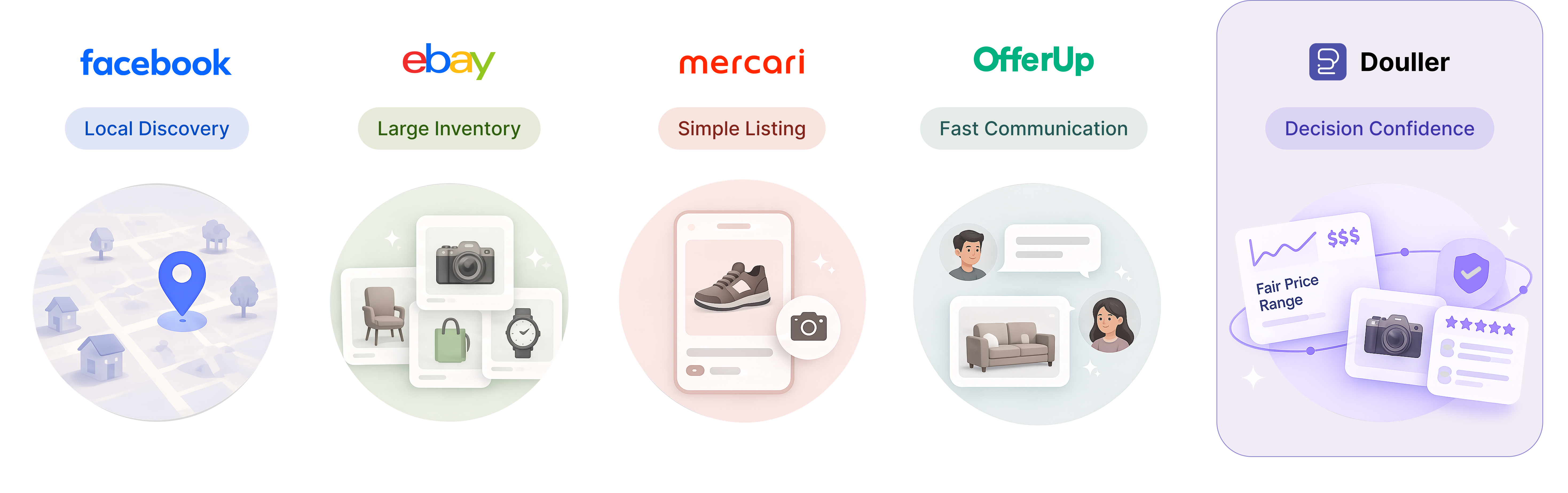
Dollar Flip entered a crowded North American marketplace where established products already owned discovery, inventory, listing speed, or communication. Competing feature for feature would not create a meaningful reason to switch.
The opportunity sat at the moments immediately before action: sellers hesitated over price, while buyers questioned whether they knew enough to purchase responsibly. This created a differentiated product position around decision confidence—helping people move forward without taking control away from them.
/ 03
Research
Research Approach
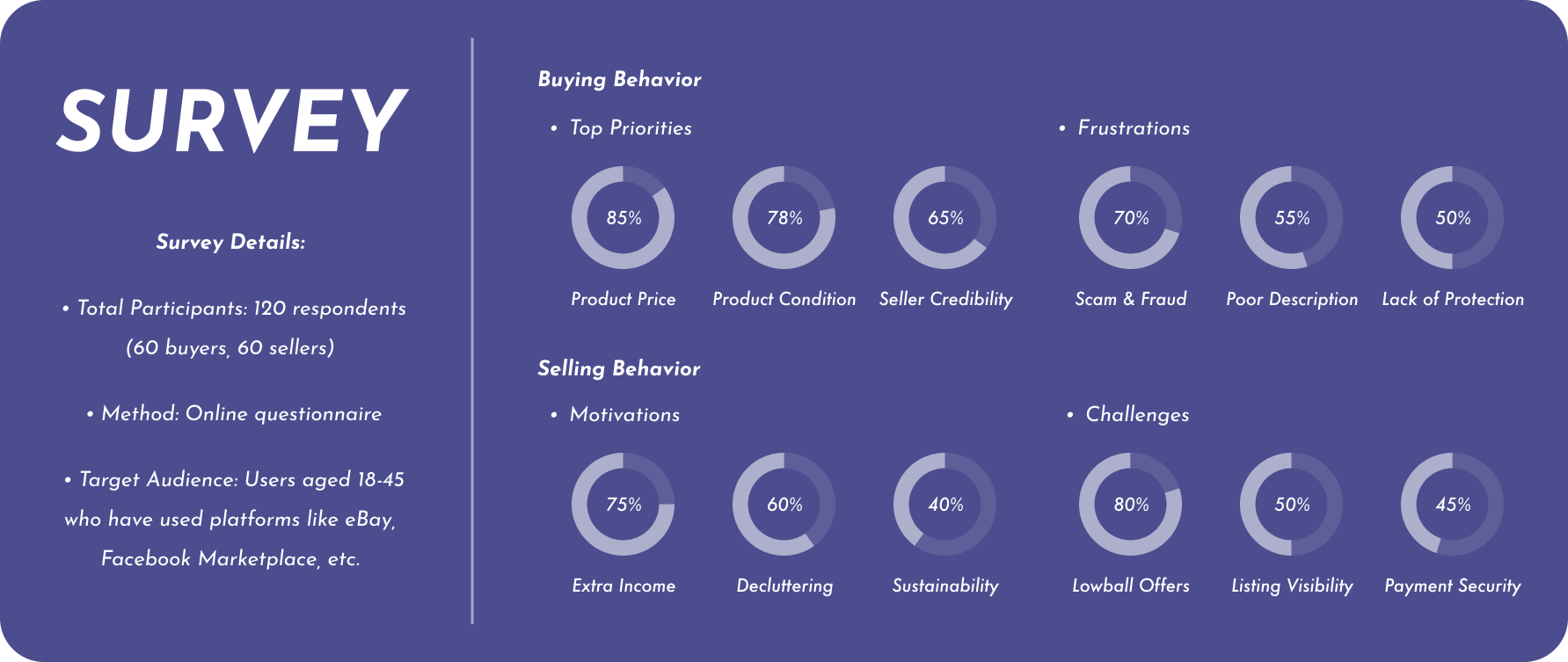
I spoke with both sellers and buyers to understand where confidence broke down across the marketplace journey. Rather than asking users to evaluate feature ideas, I focused on the trade-offs, questions, and behaviors surrounding real decisions.
I paired interviews with competitive analysis, prototype testing, and task observation to connect what people said with the moments where they paused, revised, or sought more information.
Key Insights
Sellers were not simply looking for a price recommendation. They were balancing speed against value: price too high and an item might not sell; price too low and they might lose value.
Buyers experienced a different form of uncertainty. Even when a listing contained extensive details, they worried about overlooking something important or not knowing what else to ask. The shared need was not more information or more automation—it was greater confidence before taking action.
Seller insightPricing trade-offs
Sellers struggled to know the right price for their item.
Shared opportunityDecision confidence
Support critical decisions without removing user agency.
Buyer insightInformation gaps
Buyers lacked key details to make confident purchase decisions.
/ 04
Strategy
Product Vision
We reframed Dollar Flip as a marketplace that helps people make better decisions—not one that simply makes transactions faster. Decision confidence became the product lens for prioritizing what to build, how AI should participate, and which outcomes mattered.
The framework translated that promise into two complementary experiences: make pricing trade-offs easier for sellers to understand, and surface the questions that matter for buyers in a specific product context. It aligned two distinct journeys around one product principle while preserving user agency.
Shared product promiseDecision confidence
Reduce uncertainty without removing user agency.
Seller principleClarify pricing trade-offs
Show meaningful choices while keeping sellers in control.
Buyer principleSurface relevant questions
Show relevant guidance when buyer uncertainty appears.
AI Principles
AI should clarify a decision rather than make it invisibly. Recommendations needed to explain meaningful options, preserve user control, and adapt to the goal behind the task.
For conversations, AI should strengthen human exchange—not replace it. Its role was to surface decision-critical questions at the right moment so buyers could start more focused and useful conversations.
01Reveal trade-offs
Make the consequence of each option understandable.
02Preserve agency
Keep the final judgment with the person making it.
03Guide in context
Introduce support when uncertainty becomes actionable.
/ 05
Design Opportunities
Seller Opportunity
Sellers were trying to balance two competing outcomes: selling quickly and protecting value. The opportunity was to reduce the effort of evaluating that trade-off while preserving ownership of the final decision. This created a focused question for exploration: where could intelligent guidance add confidence without becoming the authority?
Research insightI don’t know if this price is fair.
Sellers balanced speed against value without a reliable reference point.
Design directionReduce seller decision load
Clarify pricing choices without making the decision for them.
Buyer Opportunity
Buyers faced a different decision problem. Information was available, but they often could not tell which details mattered for a specific product or what to ask next. The opportunity was to reduce that information gap by helping buyers focus on the context most relevant to their judgment.
Research insightI’m not sure which details matter.
Buyers needed more details and clearer product context.
Design directionReduce buyer information gaps
Surface relevant guidance at the moment of evaluation.
/ 06
Exploration & Validation
Seller Side
Pricing concept exploration: With the question “How can we reduce seller decision load?” established, I explored AI as a decision-support system rather than an automated price setter. The A/B test isolated one strategic variable: a single recommendation for speed or a flexible range that made the trade-off visible.
A/B testing
How much authority should AI pricing carry?
A single price prioritized speed and simplicity. A flexible range exposed the trade-off and preserved more room for seller judgment.
Concept A · Single recommended priceConcept B · Flexible pricing range
What the test revealed: The single recommendation was faster to interpret, but it felt overly authoritative. Range guidance performed better on flexibility, control, and confidence because sellers could understand the trade-off and apply their own intent.
Testing criteriaSingle recommended pricePricing range guidance
SpeedStrongerAcceptable
FlexibilityAcceptableStronger
User controlAcceptableStronger
Seller confidenceAcceptableStronger
Iteration: The result reframed pricing from a recommendation into a strategy. The final direction connected each range to a seller goal—Fast Sell or Max Profit—so AI could clarify the consequences of a choice without making that choice on the seller’s behalf.
IterationPricing guidance built around seller intent
The experience turns AI recommendations into understandable goal-based choices while preserving control over the final price.
Buyer Side
First assumption: Our first response to “How can we reduce buyer information gaps?” was to improve decisions through richer listing details. We expanded the structure so sellers could provide more information upfront, then tested whether it actually increased buyer confidence.
First assumption
More listing details would close the information gap.
The concept moved from a lightweight listing to a richer structure intended to answer more questions before conversation began.
Original listingInformation-rich listing
Usability testing: Testing challenged the assumption. More fields increased seller effort, yet buyers still needed a conversation to understand product-specific risk. The problem was not the total amount of information; it was knowing which information mattered to the decision.
Usability testing insight
“I wish I knew what to ask before buying.
Participant in a moderated usability test
Reframing the direction: The evidence shifted the team from documenting every possible detail to identifying decision-critical information in context. Instead of asking sellers to anticipate every concern, the product could help buyers start a more focused human conversation.
Observed signalProduct interpretationDirection taken
More fields increased seller effort.
Volume did not create relevance
Reduce form expansion and protect listing momentum.
Buyer questions remained product-specific.
Context determined what mattered
Guide relevant questions at the moment of evaluation.
Iteration: The final iteration became an AI Buying Guide that surfaces relevant questions when uncertainty appears. It supports the buyer’s judgment and improves the conversation without replacing the seller or pretending AI has complete product knowledge.
IterationGuidance at the moment of decision
The experience helps buyers surface what matters in context instead of requiring sellers to predict every question.
/ 07
Final Design
Seller Experience
The seller journey prioritizes momentum without hiding trade-offs. Sellers create a lightweight listing, review AI-informed pricing strategies, choose the goal that fits their situation, and retain the ability to adjust the final price.
The interaction reduces guesswork while keeping ownership of the decision with the seller.
Product experienceEnd-to-end experienceFrom listing intent to a confident launch
Capture the itemAdd photos and essential product context.
Frame the selling goalChoose whether speed or return matters more.
Review an AI pricing strategyUnderstand the recommendation and its trade-offs.
Set the final priceAdjust the recommendation without losing control.
Publish and engageLaunch the listing and respond to buyer interest.
Buyer Experience
The buyer journey connects discovery, listing evaluation, guided conversation, and purchase. Instead of front-loading every possible detail, the experience progressively reveals what matters and introduces AI guidance at the moment a buyer needs to evaluate risk or ask a question.
This keeps browsing lightweight while making the transition from interest to informed action feel deliberate and supported.
Product experienceEnd-to-end experienceFrom product discovery to an informed purchase
Discover a relevant itemBrowse and evaluate a listing in context.
Identify what is still unknownSurface gaps that matter to the decision.
Review guided questionsUse AI to prioritize decision-critical information.
Start a focused conversationAsk the seller a relevant question with less effort.
Purchase with confidenceMove forward with clearer expectations.
Design System
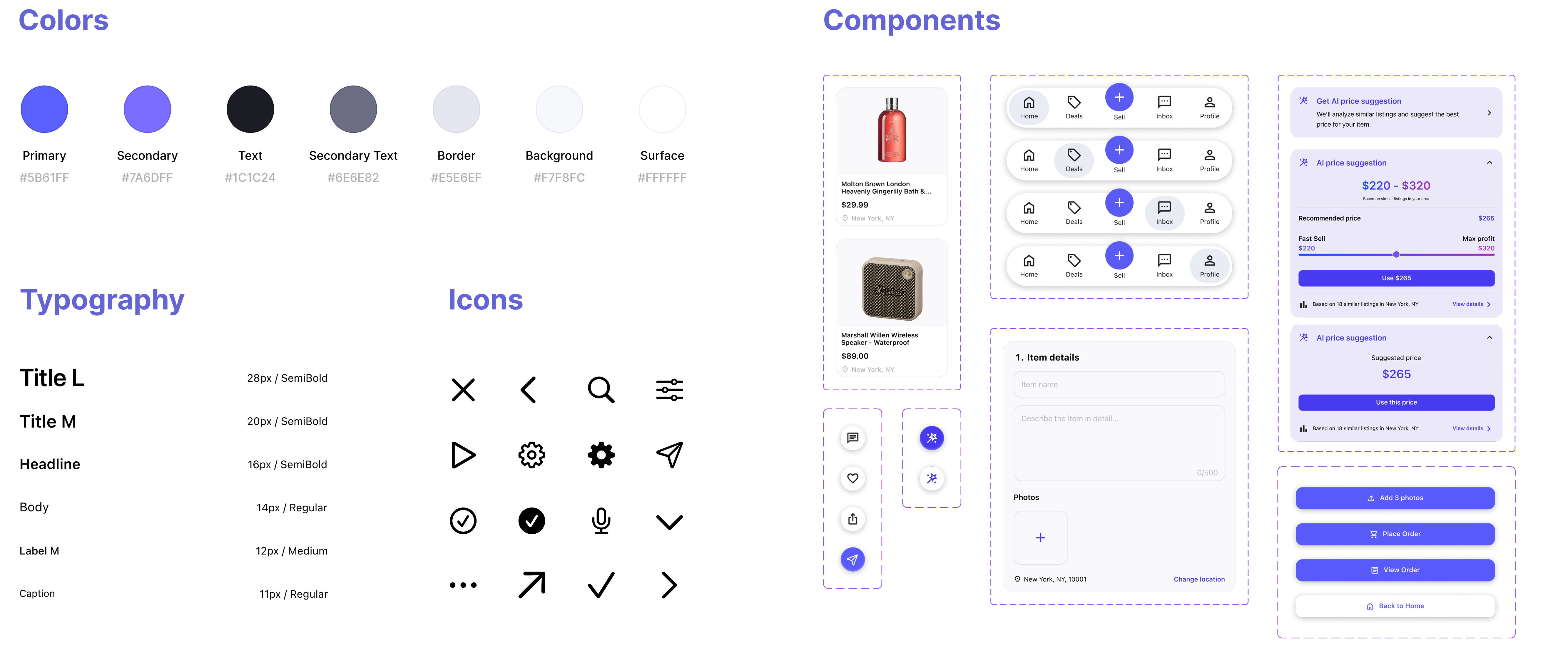
I established a scalable visual and interaction foundation across seller and buyer workflows: color, typography, iconography, listing cards, navigation patterns, input states, and AI recommendation modules.
The system gave engineering reusable patterns, accelerated iteration across multiple marketplace scenarios, and ensured that AI-assisted moments felt like a coherent part of the product rather than isolated features.
/ 08
Impact
Dollar Flip transformed the second-hand marketplace experience by reducing uncertainty at key decision moments for both buyers and sellers.
Seller Impact
Empowering Confident Selling
Sellers moved from guessing prices to making informed pricing decisions through AI-assisted guidance.
Buyer Impact
Enabling Better Purchase Decisions
Buyers moved from searching for more information to receiving guidance that surfaced what mattered most.
Product Impact
Building a Scalable AI Foundation
The project established principles for integrating AI into marketplace workflows while preserving user control.
↓35%
Pricing Revisions
Sellers needed fewer pricing adjustments after receiving AI guidance.
2×
Decision Confidence
Buyers identified relevant information more confidently with guidance.
85%
User Preference
Users preferred AI-assisted guidance over traditional marketplace flows.
/ 09
Reflection
Through building Dollar Flip, I explored how AI can create more confident marketplace experiences by supporting users at critical decision points. These learnings shaped my perspective on designing AI-powered products that balance user trust, business goals, and emerging technology.
Designing AI for Human Decision-Making: AI should enhance human judgment rather than replace it. Transparent guidance helps users make confident decisions.
Building Trust Through Reduced Uncertainty: Successful marketplaces depend on more than transactions. Reducing uncertainty builds trust for buyers and sellers.
Aligning Strategy, Users, and Technology: Meaningful, scalable solutions emerge when user needs, business goals, and technology capabilities stay aligned.