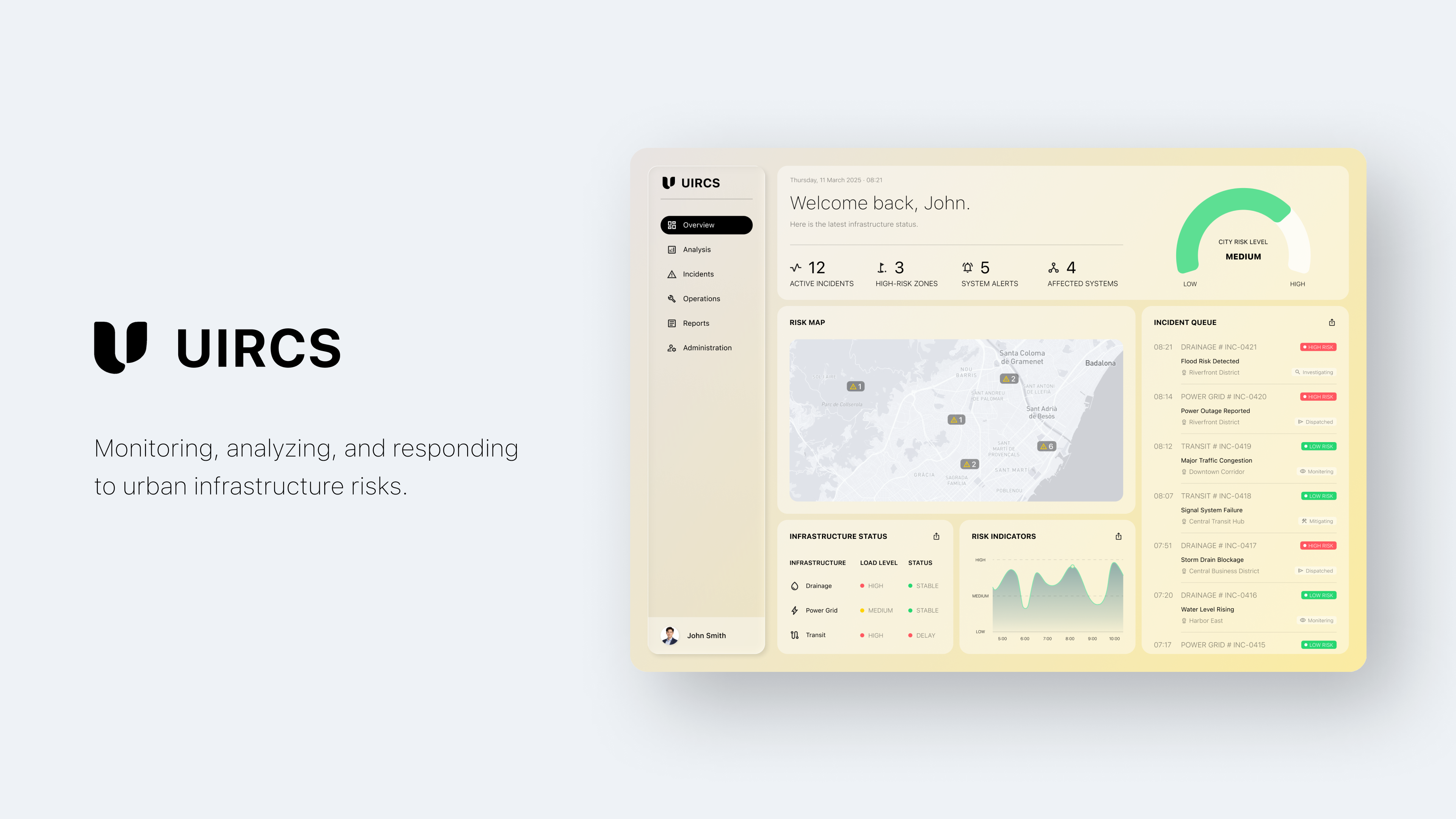
UIRCS

Back to gallery

Designing an AI operational system for coordinated infrastructure risk

North America2025
UIRCS enterprise infrastructure risk coordination system

UIRCS is an enterprise operational platform that coordinates infrastructure risk across municipal departments. Instead of adding another reporting dashboard, it connects predictive signals, decision authority, and execution pathways into one shared operational lifecycle.

I defined the system architecture, permission model, cross-department workflows, and role-based interaction environments—turning fragmented monitoring tools into a coordinated decision system.
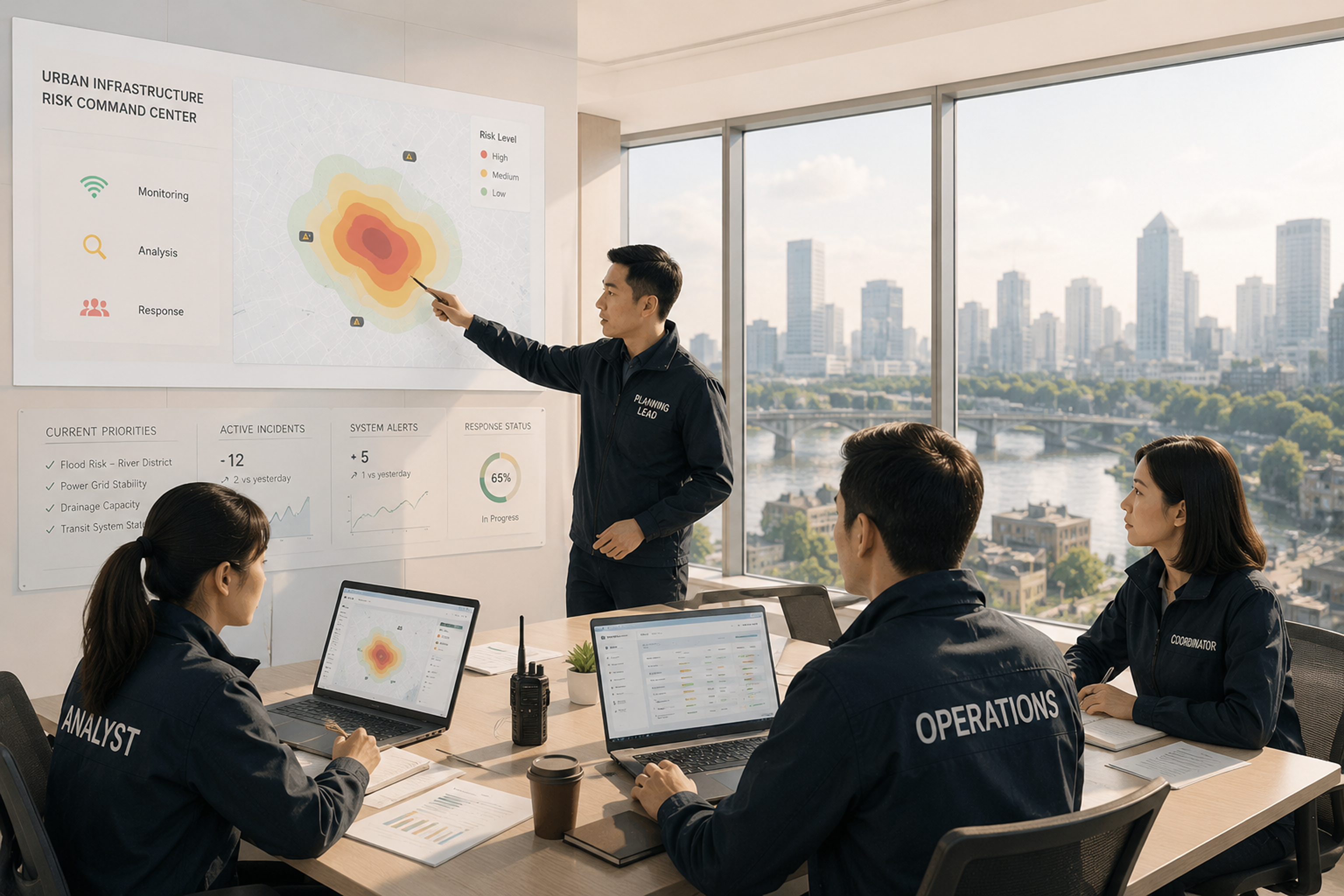

UIRCS product overview

Role

Product & Systems Designer

System architecture and end-to-end experience design.

Scope

0 → 1 Enterprise System

Enterprise product strategy, AI operations, and complex workflows.

Team

Cross-functional Team

Product, engineering, operations, and municipal stakeholders.

Structural Fragmentation

Drainage, power, and transportation teams each maintained dedicated monitoring systems, but risk intelligence remained isolated across organizational boundaries. Warning signals existed; a shared mechanism for interpreting and activating them did not.

Fragmented infrastructure monitoring systems

Governance Structure

Formal decision authority was distributed across operational departments, a coordination layer, and executive leadership. Mapping those boundaries revealed that the design challenge was not simply data visibility—it was aligning intelligence with the people authorized to act.

Stakeholder authority and governance map

From Signals to Delayed Action

Under high-risk conditions, detection, authorization, and execution operated as disconnected phases. Manual consolidation and sequential approvals introduced latency precisely when infrastructure dependencies made speed and coordination most important.

Existing fragmented operational workflow

A Unified Risk Lifecycle

The product direction shifted infrastructure management from isolated monitoring toward anticipatory coordination. UIRCS embeds predictive intelligence within a governed lifecycle that connects detection, investigation, authorization, intervention, and audit.

Strategic shift from fragmented monitoring to coordinated action

Modeling the Operating System

Rather than assembling independent features, I modeled the relationships between risk signals, cascade exposure, decision rights, and execution pathways. This created a shared operational model that every interface layer could reference.

Integrated UIRCS system model

Four Role-Aligned Layers

Command, Investigation, Operations, and Executive environments support different responsibilities while preserving one source of operational truth. The interface reflects governance rather than forcing every role into the same dashboard.

Four-layer role-aligned system architecture

Organized Around Decisions

Navigation follows the risk lifecycle rather than departmental ownership. Role-based access controls visibility, action privileges, and information density, allowing teams to coordinate through a shared model without losing responsibility boundaries.

UIRCS information architecture

Role-Based Operational Environments

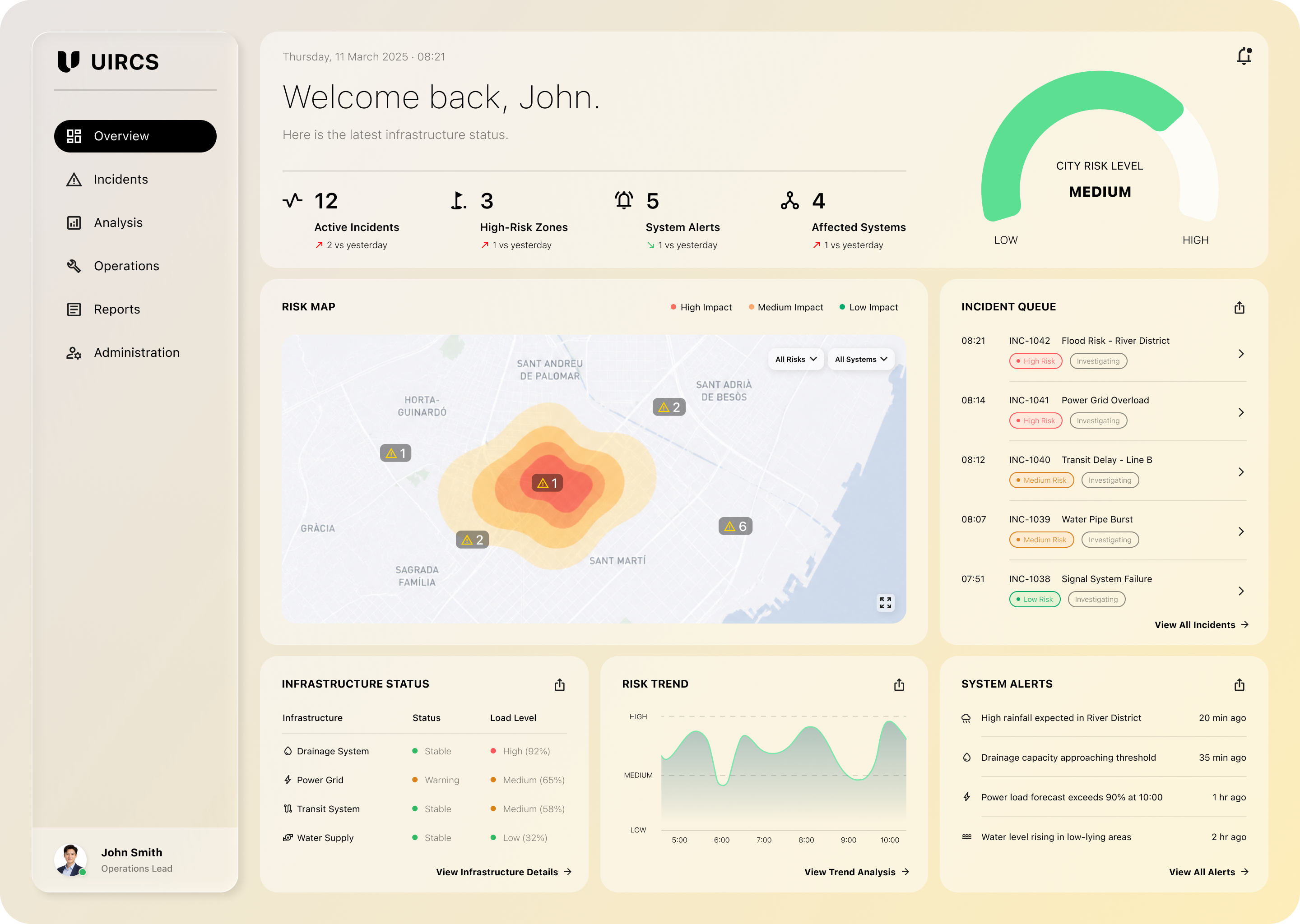
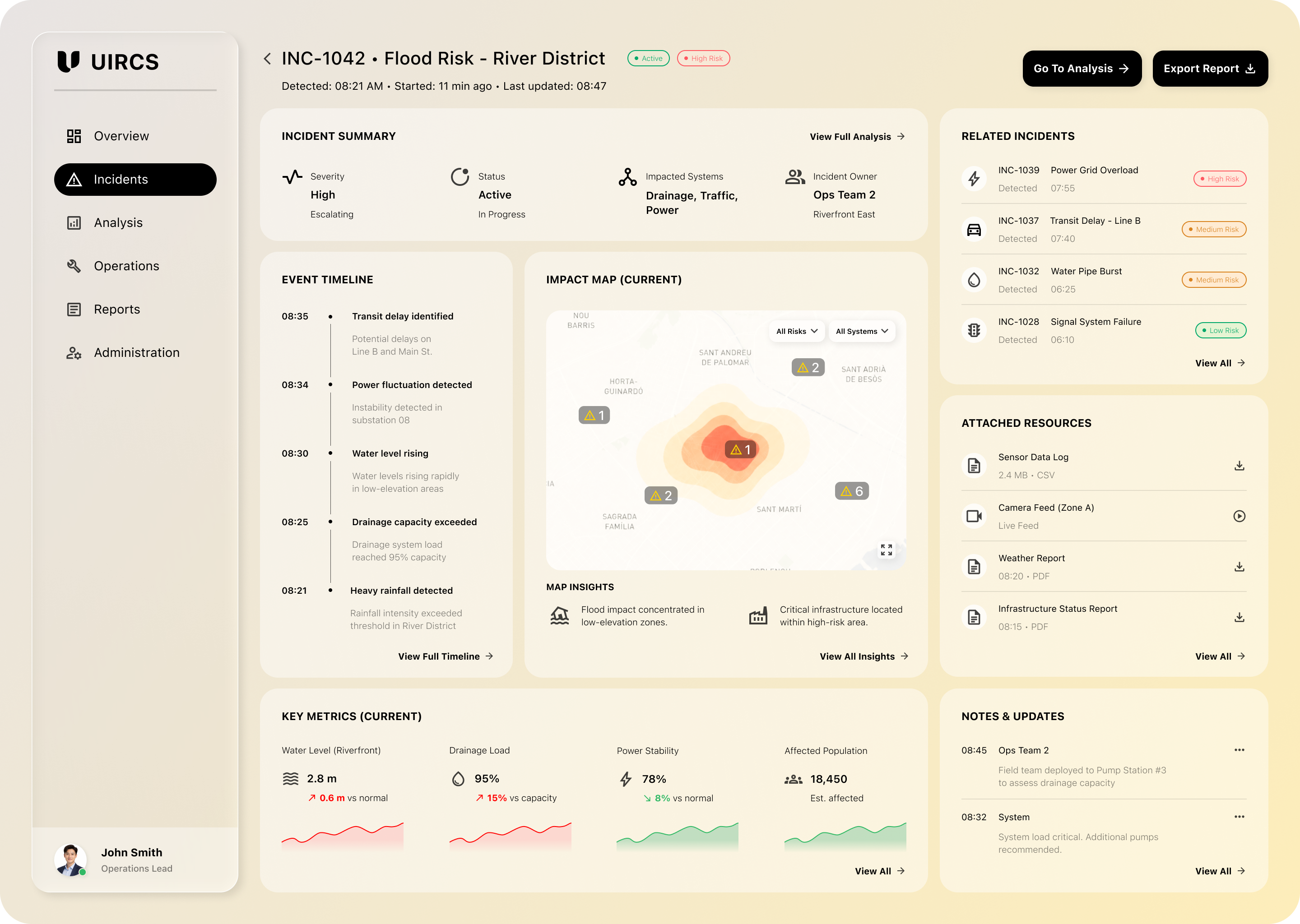
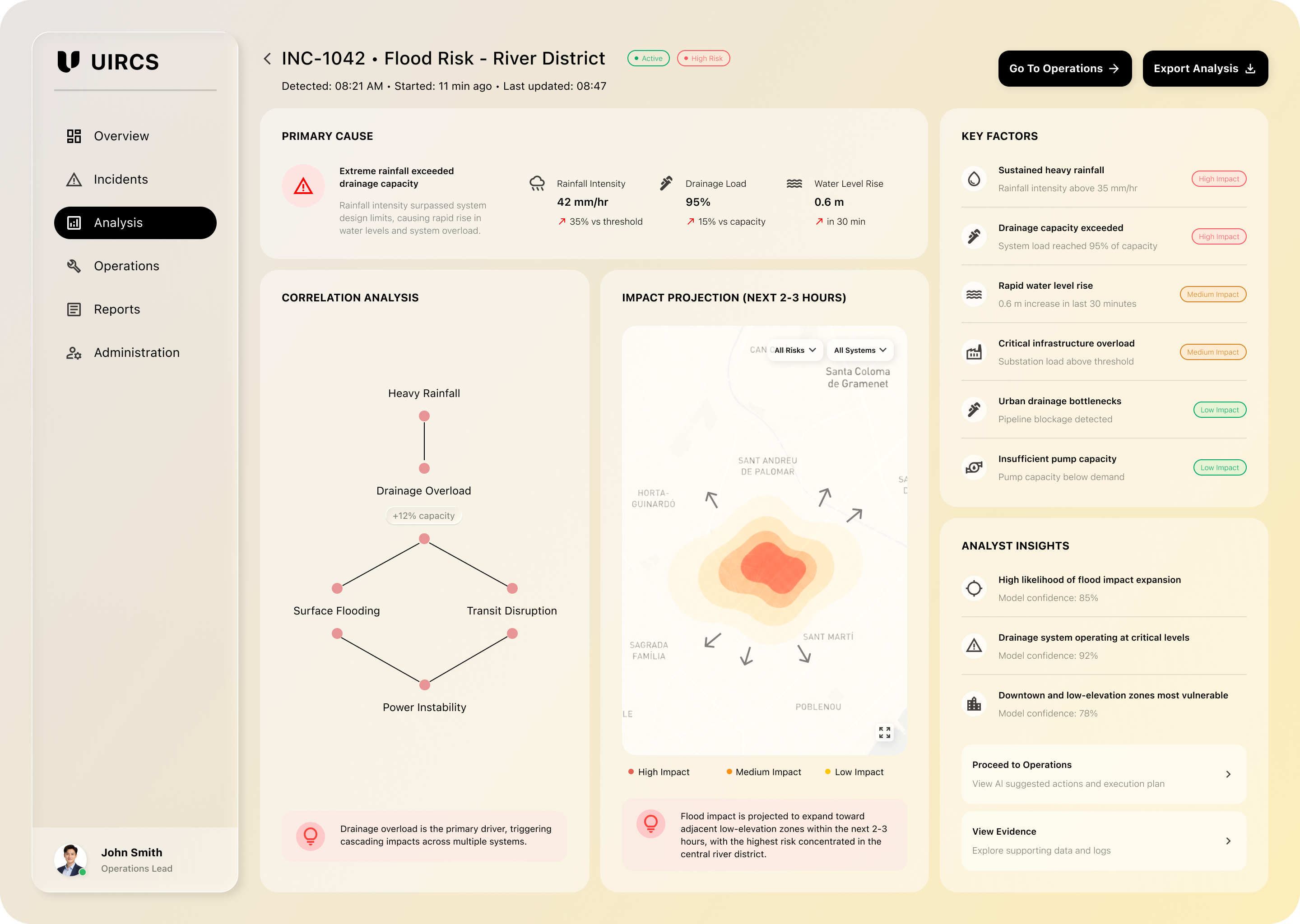
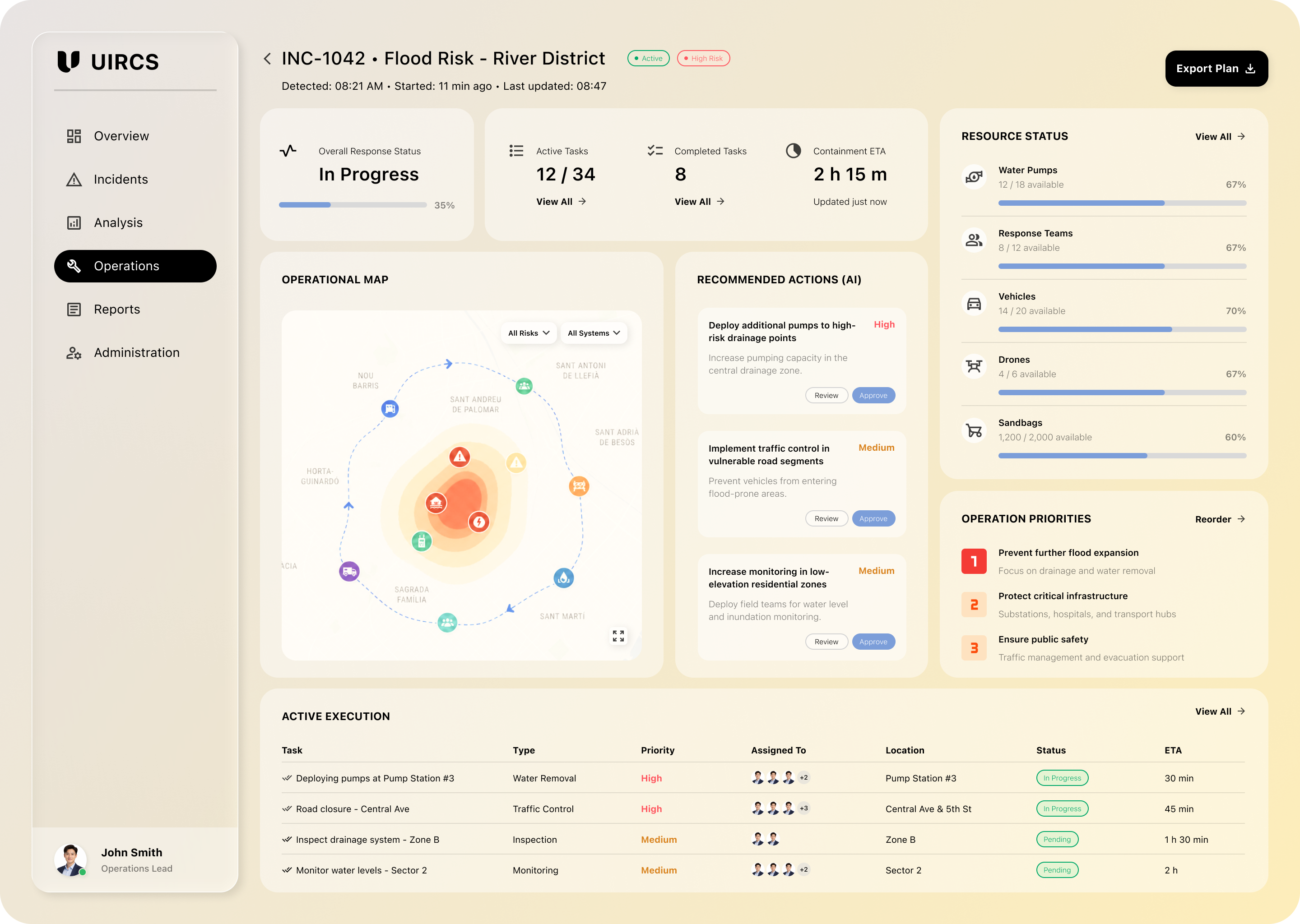
Each workspace is calibrated to a distinct decision context: maintaining situational awareness, investigating evidence, coordinating interventions, or reviewing strategic exposure. Together, the interfaces turn system architecture into actionable work.

Command overview dashboard
Incident workspace
Investigation workspace
Operations coordination panel

Calibrating Trust, Authority, and Control

AI trust calibration: Testing showed that recommendations needed visible confidence, supporting evidence, and projected impact before operators would rely on them.

Governance optimization: Redundant approval layers were reduced while explicit decision mapping and audit traceability preserved accountability.

Visible automation: Automated interventions became traceable system events with logs and override controls, preserving human oversight.

01

Explain the signal

Expose confidence, evidence, and downstream impact.

02

Clarify authority

Make decision rights and escalation paths explicit.

03

Keep control visible

Pair automation with traceability and override options.

A Coordinated Enterprise Foundation

UIRCS reframed infrastructure risk from a collection of alerts into a coordinated operating model. The project established a scalable foundation for predictive intelligence, cross-department decision-making, and governed execution.

USER IMPACT

Clearer Operational Decisions

Role-specific environments surface the evidence, actions, and accountability each team needs.

DECISION IMPACT

From Detection to Coordination

A shared lifecycle connects risk signals to timely authorization and intervention.

PRODUCT IMPACT

Scalable AI Operations

The architecture creates a reusable model for explainable, governed enterprise automation.

UIRCS coordinated operational system
/ 10

Reflection

Designing UIRCS reinforced that enterprise systems are defined less by interface complexity than by structural clarity. The hardest design questions involved governance boundaries, trust in predictive systems, and cross-department accountability.

Architecture before interface:
A coherent operating model gives every screen a clear purpose.

AI requires institutional context:
Intelligence becomes useful only when connected to authority and execution.

Automation must remain accountable:
Transparency and human control matter more than invisible efficiency.